
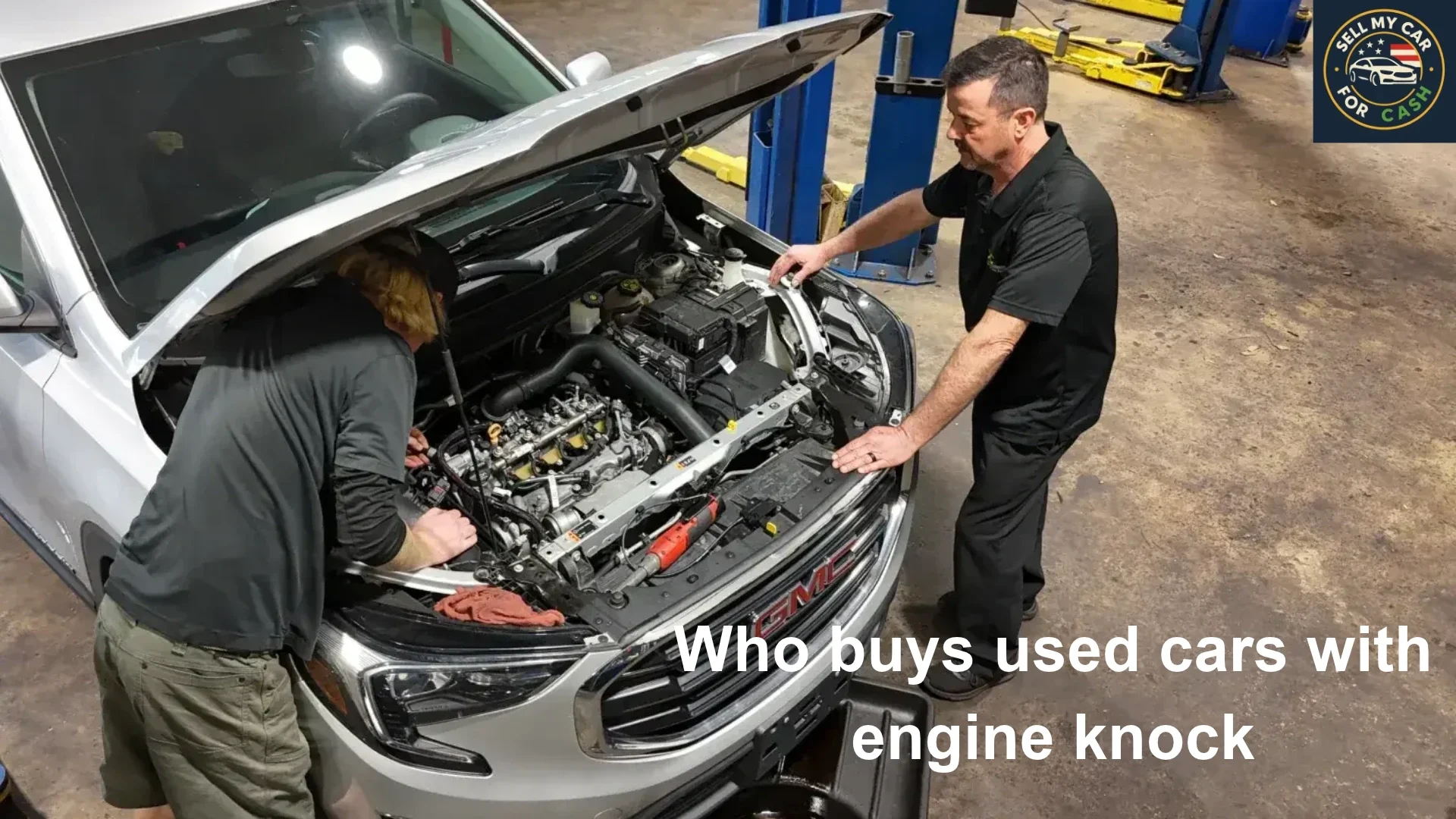
It starts small. A light tapping at a stoplight, a ticking that wasn’t there last week, and then a deep, rhythmic knock that makes your stomach sink every time you press the gas. Now you’re wondering whether your car is finished, whether anyone would take it and what you’re supposed to do next.
Here’s the good news. An engine knock is serious, but it doesn’t make your car or truck dead, and it doesn’t make it worthless. People do buy used cars with engine knock, and you don’t need to fix a thing first. This guide explains what the knock means, how to size up the damage, what your options are and how to turn the vehicle into cash. We work with sellers across the whole country, so these steps apply wherever you live.
Is Your Car Really Dead If the Engine Knocks?
Not necessarily, and not in the way people fear. “Dead” suggests there’s nothing left, yet a knocking vehicle still has a body, a frame, wheels, a transmission and an engine that may or may not be salvageable. All of those have value to a buyer.
How bad the situation is depends on what kind of knock you hear. Some knocks come from cheap, fixable problems, like low-octane fuel or carbon buildup. Others point to worn internal parts, which can lead to an expensive repair. Either way, the car can be sold, and the price will reflect what’s actually wrong.
One rule applies to all of them: don’t keep driving it. A knocking engine can fail suddenly, and extra miles can turn a repairable problem into a ruined one. If you can, tow it.
What Kind of Knock Do You Hear?
“Engine knock” covers several different sounds. Here’s how mechanics usually tell them apart:
Pinging or spark knock. A light, metallic rattle under acceleration, often when climbing a hill or carrying a load. It’s often related to fuel quality, carbon deposits or ignition timing, and it’s usually the least serious type.
Rod knock. A deep, rhythmic thud from the lower part of the engine that gets faster as the revs rise. It’s tied to worn connecting rod bearings, often after oil starvation, and it’s the one people dread.
Piston slap. A hollow knock that appears on a cold start and may fade as the engine warms. It comes from a loose-fitting piston and is common on some high-mileage engines.
Lifter or valvetrain tick. A lighter tapping from the top of the engine, often caused by low oil, dirty oil or a worn lifter. It’s usually less severe than a bottom-end knock.
Not the engine at all. A loose heat shield, an exhaust leak, a failing belt tensioner or a worn flexplate can sound like a knock. A mechanic can sort this out quickly.
Diesel engines deserve a side note. They naturally make a rattling clatter because of how they burn fuel. A new, deeper or louder knock is the thing to worry about.
How Serious Is Your Knock?
You can do a quick triage before spending any money:
- Check the oil level and color. Very low, dark or metallic-looking oil is a red flag.
- Look at the dashboard. An oil pressure light that comes on with the knock suggests a more serious problem.
- Notice when it happens. A knock that follows engine speed is more concerning than one that appears only on cold starts or hard acceleration.
- See if it fades. A noise that disappears when the engine warms up is usually less serious than one that stays or grows.
- Ask a mechanic to listen. A mechanic with a stethoscope can often tell you where the sound comes from in a few minutes.
If in doubt, assume the worst and avoid driving. A basic diagnosis is cheap compared with a destroyed engine.
Can You Sell It Without a Diagnosis First?
Yes. A diagnosis is useful if you’re weighing a repair, but it isn’t required to sell. Most buyers who work with engine trouble price the car on the assumption that the engine needs work. If you do get a diagnosis, keep the written report, since it helps explain what’s wrong. If you don’t, describe the noise, when it began, the oil level and any warning lights. That’s usually enough for a fair offer. Paying a shop for a deep teardown only makes sense if you’re seriously considering the repair.
What Should You Do the Day You Hear It?
Take these steps right away:
- Pull over and shut it off as soon as it’s safe.
- Check the oil once the engine has cooled for a few minutes.
- Don’t rev it or try a “quick drive” to see whether it clears up.
- Arrange a tow if the knock is deep, loud or paired with a warning light.
- Write down what happened: when the noise began, what it sounded like and any recent oil leaks, overheating or maintenance.
Those notes help a mechanic and help a buyer price the car accurately.
Should You Try Thicker Oil or an Additive First?
It’s a common question, and the honest answer is “probably not.” Thicker oil or an engine-noise additive can sometimes quiet a worn engine for a little while, because it cushions the clearance between parts. It doesn’t repair worn bearings, scored cylinders or a bad lifter. Heavier oil than the manufacturer recommends can also reduce lubrication in cold weather or in tight engine passages.
If the oil is simply low or overdue for a change, topping it up or changing it with the grade listed in your owner’s manual is fair game. If the knock stays after that, treat it as a real problem. A temporary fix that lets you drive farther can cost you the whole engine.
Can It Be Fixed, and Is It Worth It?
It depends on the knock. A fuel-related ping may cost nothing more than a tank of higher-octane gas and a cleaning treatment. A lifter problem might mean an oil change and some valvetrain work, costing a few hundred dollars up to a couple of thousand. A true rod knock usually means a rebuild or a replacement engine, which commonly costs between $3,000 and $7,000, and more for trucks, European models and turbocharged engines.
Here’s a rough test. If the repair costs more than about half of what the car is worth running, fixing it rarely pays off, especially on an older vehicle.
Before you decide, check two things. First, look up your VIN at nhtsa.gov/recalls, because some engine families have known problems. Second, ask the manufacturer or a dealer whether your engine has an extended warranty or a repair program. If it does, repair might cost a lot less than you expected.
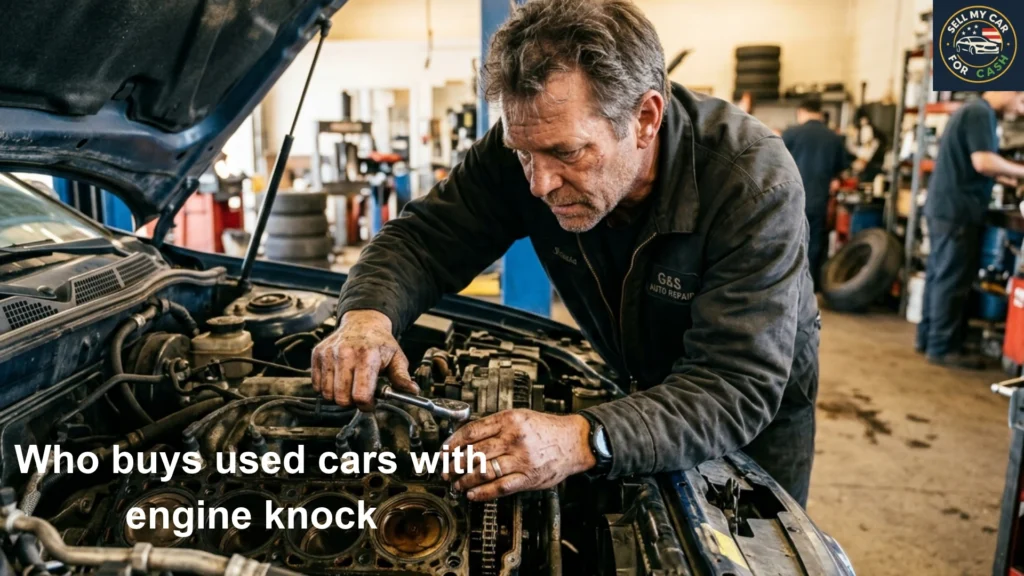
Should You Sell or Keep a Car With Engine Knock?
Think about three things: the car’s value, the repair cost and what you need from the vehicle.
Selling makes sense when the repair would cost half the car’s value or more, when the car is old or high in mileage, or when you simply don’t want the stress. It also makes sense if the car has other issues, such as rust, a worn transmission or a failed inspection, because an engine repair wouldn’t fix those.
Keeping it may make sense when the knock turns out to be minor, when the car is newer or has low miles, when a warranty or repair program covers the work or when the car has special value to you. A second opinion from a different shop is reasonable if the first quote seems high.
There’s no shame in either choice. The mistake is waiting so long that the car loses more value than the decision was worth.
Who Buys Used Cars With Engine Knock?
Your options come down to who sees value in the car as it is:
- Dealers. Some will take a trade-in with engine trouble, but the offer often reflects the repair risk, and many dealers pass on cars that aren’t running well.
- Private buyers. Mechanics and hobbyists sometimes want a project. You’ll earn little, deal with haggling and meet strangers, and you must disclose the knock.
- Auctions. Quick but unpredictable, with fees and reserves.
- Scrapyards. They pay for metal weight, often expecting you to deal with the tow.
- Direct buyers like us. We price the whole vehicle, running or not, send a tow truck at no charge to you and handle the paperwork. Our cash for junk cars page explains how we think about older vehicles.
If you want the quickest and simplest route, a direct buyer is hard to beat.
How Much Cash Can You Get for a Car With Engine Knock?
No honest buyer can name a final number without knowing the car. In general, offers for cars with engine knock run from a few hundred dollars for an older, high-mileage vehicle to a couple of thousand dollars or more for a newer, clean, in-demand model. Those are ballparks, not promises.
What moves the number:
- Make, model and year. Popular models hold value. Browse our car models page.
- Severity of the knock. A mild tick is priced differently from a loud rod knock.
- Whether it runs and drives. A car that still runs generally brings more than one that won’t start.
- Overall condition. Body, glass, wheels, interior and transmission all count.
- Missing parts. A missing catalytic converter or battery reduces the offer.
- Weight and scrap prices. Metal value shifts over time.
- Paperwork. A clean title keeps things simple.
The surest way to see your number is to describe the car honestly through our instant offer form. Include what the knock sounds like and when it happens.
Does Mileage Change the Picture?
It does. As a rough guide:
- Under 100,000 miles. A knock this early is unusual and may be covered by a warranty or recall. Check before you spend or sell.
- 100,000 to 200,000 miles. Wear is a common cause. Repair can make sense on a valuable car, but many owners decide it’s time to sell.
- Over 200,000 miles. Repairing a knock rarely pays off, and a direct sale is usually the easiest choice.
These are general patterns, not rules. A well-kept car with high mileage can outlast a neglected one with low mileage, and your mechanic’s opinion matters more than any chart.
Do You Have to Tell the Buyer About the Knock?
Yes, and it works in your favor. Hiding a known engine problem can create legal trouble in a private sale, and the rules vary by state. With a professional buyer, honesty simply keeps the price firm. We price the car based on what you tell us, and when the car matches your description, the offer holds at pickup. A surprise at the curb leads to a lower number or a cancelled deal.
What About Trucks and SUVs With Engine Knock?
Trucks and SUVs carry heavier loads and often tow, which can make engine problems show up faster. A knock that appears when you’re hauling or towing could be a sign of worn bearings or a fuel or timing problem. Repairs on larger engines usually cost more, and diesel engines can be pricier still.
The good news is that trucks and SUVs hold value, even when something’s wrong. Frames, drivetrains and bodies stay worth something. Tell the buyer about any lift kits, towing equipment, bed covers or other modifications, and describe the knock as precisely as you can.
What Do Real Situations Look Like?
Here are three typical ones. They’re composites, not customer stories, but they show how decisions tend to go.
The commuter car. A 12-year-old sedan develops a tapping noise that gets louder over a month. The oil is low, and a mechanic suspects worn bearings. The repair costs more than the car is worth, so the owner skips it and sells the car as is.
The tow truck. A work pickup starts knocking while hauling a trailer. The owner doesn’t want to pay for an engine rebuild on a truck with 220,000 miles. A direct buyer picks it up and pays for the truck as it sits.
The ping that wasn’t serious. A driver hears a light rattle under hard acceleration. A mechanic finds heavy carbon buildup and the wrong fuel grade. A cleaning and a tank of higher-octane gas fix it, and the car doesn’t need to be sold at all.
In each case, a quick diagnosis made the decision clear.
How Does the Sale Work?
The process is short, and the engine doesn’t need to run.
- Share your car’s details. Year, make, model, condition, ZIP code and what the knock sounds like.
- Review your offer. It’s based on your actual vehicle, and there’s no obligation.
- Choose a pickup time. Same-day pickup is often possible depending on where you live. We arrange towing in all 50 states and cover the cost.
- Hand over the paperwork. The driver confirms the car matches your description, and you sign the title and bill of sale.
- Get paid. Payment follows when the car leaves.
Our free car removal page covers towing in more detail.
What Paperwork Do You Need?
You’ll need the title in your name, a photo ID and a bill of sale. If you still owe money, your lender holds the title and you’ll need a payoff figure. Our FAQ page answers questions about selling with a loan. If the title is missing, see our guide to cash for cars without a title. Many states also provide a release of liability form, so check yours.
What Mistakes Should You Avoid?
A few common ones cost people money:
- Driving it “just a little more.” A short trip can destroy a repairable engine.
- Pouring in additives and hoping the noise goes away. They rarely fix worn bearings.
- Paying for a full teardown before you know the repair is worth it.
- Hiding the knock from a buyer.
- Waiting months. The car keeps losing value while it sits.
- Signing the title before you’re paid.
Why Choose to Sell My Car for Cash?
We buy cars and trucks in any condition, running or not, with a title or without one. Your offer is based on your actual vehicle, towing is free and we serve all 50 states. Questions are welcome at (888) 781-2436, so ask about pricing, paperwork or timing before you decide. An offer costs nothing to request, and there’s no pressure to accept it.
FAQs
Can I sell a car with engine knock?
Yes. Engine knock lowers the price but doesn’t make the car unsellable. Buyers of vehicles with engine trouble expect it and price it in.
Is a car with engine knock dead?
Not necessarily. Some knocks are caused by cheap, fixable issues, and even serious ones leave a car with value. Avoid driving it until a mechanic checks it.
How much is a car with engine knock worth?
It depends on the year, make, model, severity, condition and title. An instant offer is the quickest way to see your number.
Do I pay for towing?
Not with us. Pickup is free in all 50 states. With other buyers, ask about towing and admin fees before accepting.
Can I sell a truck with engine knock?
Yes. We buy trucks, SUVs and vans with engine problems, and the process is the same.
Will the offer change at pickup?
It shouldn’t, if your description is accurate. The driver checks that the car matches what you told us. Only a real difference could change the price.
Ready for Your Offer?
An engine knock is a warning, not the end of your vehicle’s value. Find out what you’re hearing, weigh the repair cost and compare your options. Whatever you choose, decide before the knock gets worse. If selling is the better path, request your price through our instant offer form and we’ll arrange the rest.