The smell is what stays with you. Even after the flames are out and the fire trucks have left, the sharp odor of burned plastic and scorched metal hangs over the driveway. Now you’re standing next to a blackened car, wondering what it’s worth, who would take it, and what you’re supposed to do first.
Here’s the good news: a fire doesn’t erase a car’s value. At Sell My Car for Cash, we buy fire-damaged cars in any condition, from a scorched engine bay to a full burnout, and we tow them away for free. This guide covers what to do right after a fire, how insurance fits in, what burned cars are worth and how the sale works. Start wherever you are in the process.
What Should You Do Right After a Car Fire?
Safety comes first, and the car comes second. If the fire just happened, work through these steps in order:
- Get everyone away from the car and call 911. Stay well back, since tires, tanks and shocks can burst.
- Don’t open the hood. A rush of fresh air can feed an engine fire.
- Ask the fire department for a report. It records the cause and date, which your insurer may ask for.
- Photograph everything once it’s safe: all sides, the interior, the engine bay and the surroundings.
- Don’t try to start the car. Damaged wiring and fuel lines can cause a second fire.
- Call your insurance company soon, even if you’re still deciding what to do with the car.
It’s a stressful day, so write down what you did and when. Those notes help later.
What Caused It, and Does It Matter?
Yes, for two reasons: it can affect your claim, and it can affect whether anyone else is responsible.
Most vehicle fires start from a handful of sources. Electrical faults, fuel leaks, overheated exhaust components and oil dripping onto hot parts account for many of them. Collisions can start fires, too, and so can a house fire, a garage fire or a wildfire that reaches a parked car. Arson and vandalism happen as well.
One practical step: enter your VIN on the National Highway Traffic Safety Administration’s recall lookup at nhtsa.gov/recalls. Some fires trace back to a known defect, and an open recall could matter if you’re deciding whether to pursue a claim or talk to the manufacturer. If you’re unsure, an independent mechanic or the fire investigator may be able to point to the origin. Either way, you don’t need to settle the cause before selling the car.
How Bad Is the Damage?
Fire damage covers a wide range. These are the usual categories, from lightest to heaviest:
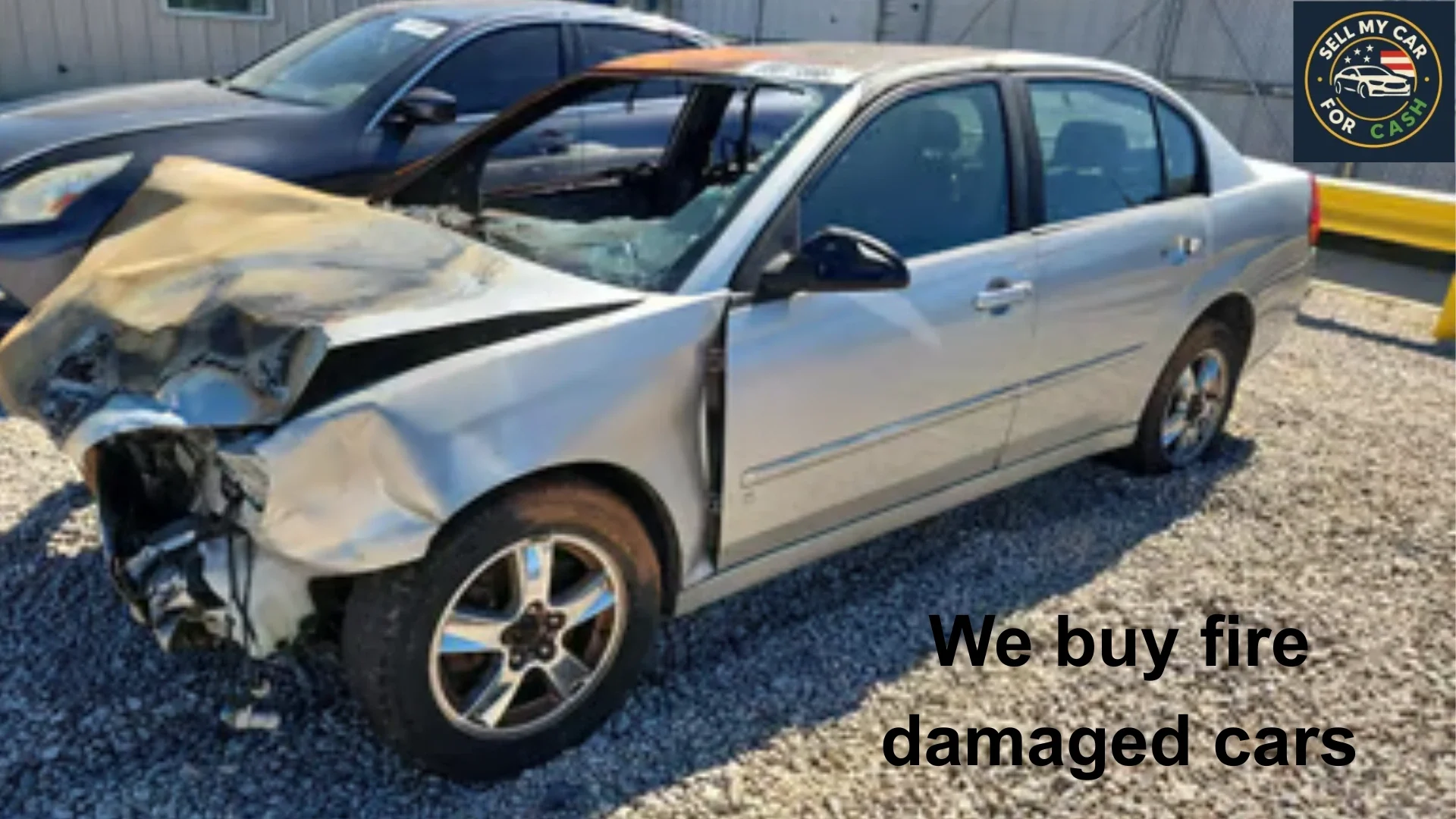
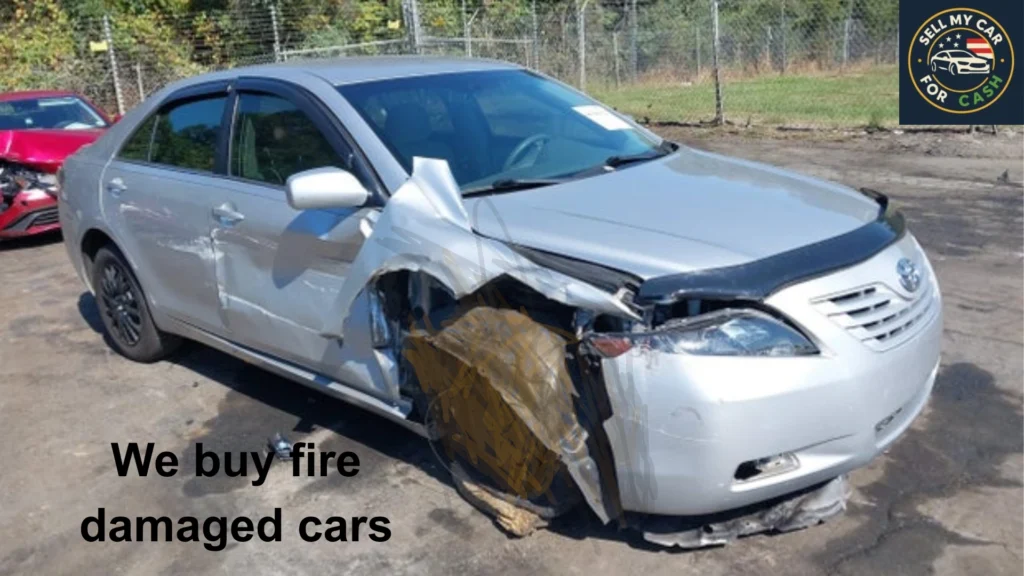
Engine bay fire. Flames start under the hood and burn hoses, wiring and plastic covers. The cabin may be untouched. The engine itself is often damaged by heat, and the electrical system takes a beating.
Electrical or dashboard fire. Wiring burns behind the dash or in the fuse box. Smoke fills the cabin even if the flames stay small.
Interior fire. Seats, carpet and headliner burn. Windows may crack, and soot spreads everywhere.
Exterior or brush fire. A wildfire or nearby blaze scorches paint, melts lights and trim, and may blister tires. The mechanical parts may survive better.
Total burnout. The whole vehicle is consumed. Glass is gone, tires have melted and the metal is discolored or warped. Value comes mostly from scrap weight.
Knowing which one fits your car helps you describe it honestly, which in turn helps you get a number you can trust.
Is a Fire-Damaged Car Safe to Keep?
Not without a thorough inspection. Heat can weaken metal, melt wiring insulation and compromise brake lines, fuel lines and airbag systems. Soot and melted plastics leave residues that irritate lungs and skin, and the smell often never fully leaves. Even a car with a “minor” fire can hide damage behind the dash or under the carpet.
If you plan to keep the car, have a qualified shop go through it before anyone drives it. If you plan to sell it, don’t drive it at all. Have it towed.
Does Smoke Damage Matter Even If the Fire Was Small?
More than most people expect. Smoke and soot travel through vents, seams and wiring channels, and they settle in places you can’t see. The residue can be acidic, and over time it corrodes connectors, circuit boards and metal surfaces. The heating and air system often carries the smell into every corner of the cabin, and no amount of air freshener fixes that.
For a buyer, this matters because electronic modules, control units and wiring harnesses are expensive to replace, and smoke contamination makes them unreliable. It’s also why a car with a “small” interior fire can be valued closer to a heavily damaged car than you’d think. The upside is that honest details, such as which parts burned, which didn’t and how far the smoke traveled, help a buyer price your car accurately instead of guessing low.
Will Insurance Cover a Car Fire?
Fire is generally covered under comprehensive coverage, not collision. If you carry comprehensive insurance on the car, your insurer will probably investigate and decide whether to repair the car or declare it a total loss. A total loss means the repair cost passes a threshold relative to the car’s value, and the thresholds vary by state and by insurer. In that case, the company usually pays the car’s actual cash value, minus your deductible.
In many states, a total-loss car receives a salvage title, which shapes how it can be sold afterward. If you still owe on the car, the payout may go to your lender first.
Compare the settlement with the market. Sometimes the payout beats any buyer’s offer, especially for a newer car. If you have no comprehensive coverage, a direct cash sale may be your best way to recover value. And if you’d rather keep a totaled car or sell it yourself, ask your insurer about keeping the salvage. Call before selling anything, because an open claim can affect who has the right to the car.
Should You Sell Now or Wait for the Settlement?
If an insurance claim is open, wait for direction. Selling a car before the claim is resolved can complicate or even cancel what you’re owed. Ask your adjuster when they plan to inspect the car, whether they’ll move it themselves and what paperwork they need from you.
If there’s no claim, or the claim is closed, don’t wait long. A burned car at a tow yard can rack up storage fees, and a car sitting outside keeps deteriorating. Moisture seeps into burned areas, tires and glass continue to degrade, and any leftover fluids can leak onto your driveway. A quick decision usually protects more of the car’s value.
Can a Burned Car Be Repaired?
Sometimes, yes, when the fire was small and limited to the engine bay or a single area. But fire repairs are rarely simple. Shops may have to replace wiring harnesses, control modules, hoses, glass and interior parts, and clean or replace everything touched by soot. Costs climb quickly, and a repaired car with a fire history sells for less.
A rough test: if the estimate reaches half of what the car was worth before the fire, repair rarely pays off, especially on an older car. For a newer car with a small, well-contained fire, an estimate is worth having. Get it in writing, and ask the shop to describe exactly what it replaced.
Who Buys Fire-Damaged Cars?
Your options come down to who sees value in what’s left:
- Your insurer pays a settlement if the claim covers it, then takes the car or leaves it with you.
- Dealers rarely want burned cars, and a trade-in offer is usually very low.
- Private buyers are scarce. Most people don’t want smoke damage and a salvage history.
- Scrapyards pay for metal weight, often expecting you to handle the tow.
- Direct buyers like us price the whole vehicle, arrange free towing and handle the paperwork. See our page on how to sell your damaged car for cash for how that works.
What Do Real Situations Look Like?
Here are three typical ones. They’re composites rather than customer stories, but they show how decisions tend to go.
The engine bay fire. An older minivan starts smoking at a red light, and the driver gets out safely. The fire department puts it out quickly. The cabin is fine, but the engine and wiring are cooked. The repair estimate is higher than the van’s value, so the owner skips repairs and sells the van as is, tow included.
The garage fire. A small electrical fire in a home garage scorches the car parked inside. The insurer handles the house claim, and the car is a separate comprehensive claim. The owner waits for the settlement, then sells the salvage rather than hauling it to a yard.
The wildfire near-miss. An SUV sits in a driveway as a wildfire passes. The paint is blistered, the tires are damaged and the interior smells like smoke, but the engine and frame weren’t touched. Because much of the car survived, the offer reflects the working parts rather than just scrap weight.
In each case, the owner made the best choice by getting the facts first: what burned, what didn’t and what insurance would cover.
What Is a Fire-Damaged Car Worth?
It depends on how much of the car survived. A car with a contained engine bay fire and an untouched interior keeps more value than a total burnout, where the offer mostly reflects scrap metal.
Offers for fire-damaged cars generally run from a few hundred dollars for an older vehicle that burned badly to well over a couple of thousand for a newer, in-demand model with limited damage. Those are ballparks, not promises. Several factors move the number:
- Make, model and year. Popular vehicles hold more value. Browse our car models page.
- Extent of the fire. Engine bay, cabin or the whole car.
- What survived. Wheels, transmission, glass and body panels that escaped the heat.
- Weight and scrap prices. Metal value changes over time.
- Insurance status. An open claim or a salvage title changes how the sale works.
- Access. A car that can be reached and loaded easily is simpler to buy.
Photos help a lot. When you request an offer through our instant offer form, include clear pictures of the exterior, interior and engine bay. Honest photos and details help us quote a number that holds up at pickup.
What About Hybrid and Electric Cars?
If your fire-damaged car is a hybrid or an electric vehicle, tell the buyer up front. A damaged lithium-ion battery can reignite hours or even days after the fire appears to be out, which is why tow yards and fire departments treat these vehicles carefully. It’s not a reason you can’t sell, but it affects how the car is stored, transported and handled.
Keep the car away from garages, buildings and other vehicles until it’s picked up, if you can do so safely. And follow any instructions from the fire department. If they gave any specific instructions for the vehicle, pass them along when you request your offer.
How Does Towing Work for a Burned Car?
Burned cars are usually undrivable and often unable to roll. Tires may be melted, brakes may be seized, and fluids may be leaking. That’s why a flatbed with a winch is the standard tool.
We arrange the tow and cover the cost, in all 50 states. To help the pickup go smoothly:
- Tell us where the car is, and whether it’s at your home, a tow yard or a storage lot.
- Mention leaking fluids, melted tires or locked wheels.
- Let us know if the car is a hybrid or an electric vehicle.
- Keep your keys, title and ID handy.
Our free car removal page covers more. If you can’t be there on pickup day, ask about other arrangements before you book.
What Paperwork Do You Need?
You’ll need the title in your name, a photo ID and a bill of sale. If the insurer declared the car a total loss, you may have a salvage title or may need to complete the insurer’s transfer paperwork first. Ask your claims adjuster what they require before you sell.
If you owe money, your lender holds the title. Our FAQ page answers questions about selling with a loan. If the title is lost or missing, see our guide to cash for cars without a title. Many states also provide a release of liability form, so check yours.
What Happens Between the Offer and the Payment?
Share your car’s details and photos, and you’ll receive an offer based on the car’s real condition. There’s no obligation to accept it. Choose a pickup window, and depending on your location, same-day pickup is often possible. The driver checks that the car matches your description, you sign the title and bill of sale, and you’re paid. Afterward, remove your plates if your state requires it, file a release of liability if one is available, and update your insurance.
What Should You Avoid After a Car Fire?
A few mistakes cost people money and safety:
- Starting the car “just to see.” It can start a second fire.
- Driving it anywhere. Even a short drive can be unsafe.
- Selling before talking to your insurer. It can jeopardize a claim.
- Leaving it at a tow yard for weeks. Storage fees add up quickly.
- Skipping photos. They help with insurance and with your offer.
- Downplaying the damage. An honest description keeps the price firm at pickup.
Why Choose to Sell My Car for Cash?
We buy cars and trucks in any condition, including fire damage, with a title or without one. Your offer is based on your actual vehicle, towing is free, and we serve all 50 states. If your car is older or beyond repair, our cash for junk cars page may be a closer fit. Questions are welcome at (888) 781-2436, so ask about pricing, paperwork or timing before you decide. An offer costs nothing to request, and there’s no pressure to accept it.
FAQs
Can I sell a car that was damaged by fire?
Yes. Fire damage lowers the price but doesn’t make the car unsellable. Buyers of damaged vehicles expect it and price it in.
Do you buy a totally burned car?
Yes. A total burnout is valued mostly for its scrap metal, so the offer is lower, but it’s still worth something and the towing is free.
Does the car have a salvage title after a fire?
Often, an insurer declares it a total loss, but the rules vary by state. A car with minor fire damage that was never claimed may still have a clean title.
Do I pay for towing?
Not with us. Pickup is free in all 50 states. With other buyers, ask about towing and admin fees before accepting.
How much is a fire-damaged car worth?
It depends on the year, make, model, extent of the fire and what survived. Older cars may bring a few hundred dollars, while newer ones can bring far more. An instant offer is the quickest way to see yours.
Should I call my insurance company first?
Yes, if the car is insured. Fire is usually covered by comprehensive insurance, and an open claim can affect who can sell the car. Once that’s settled, you can decide on the best way to sell.
Ready for Your Offer?
A car fire is a hard day, but the car doesn’t have to become a second headache. Take care of safety and insurance first, be honest about the damage, and compare your options. When you’re ready to sell, request your price through our instant offer form and we’ll arrange the rest.