
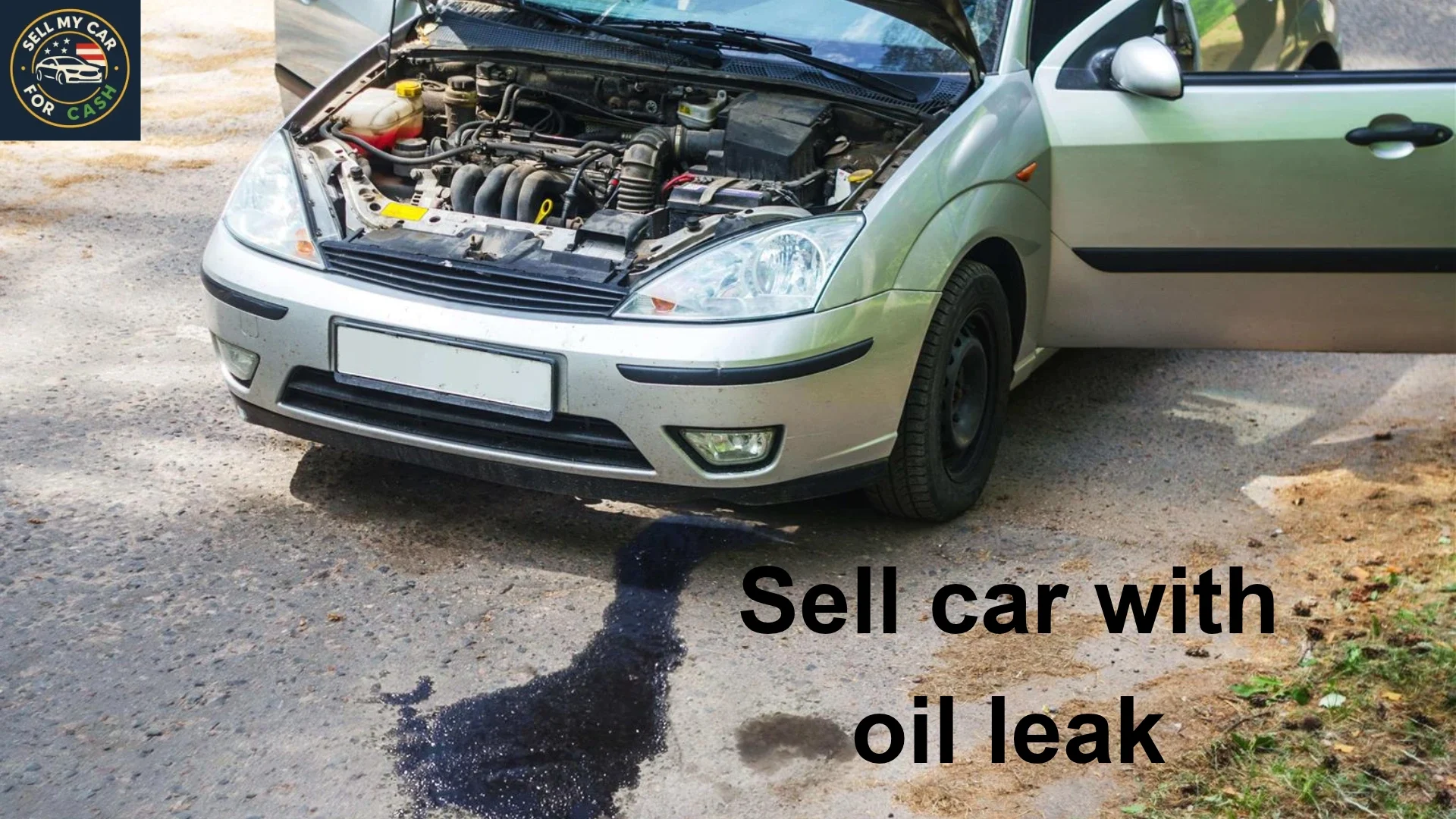
You pull out of the driveway and there it is again: a dark, spreading patch on the pavement where your car sat overnight. Yesterday there were a few spots. Today it’s a puddle. You check the dipstick and it’s barely wet, and now a nagging question takes over. Is this car finished, or can you still sell it?
You can. A major oil leak is a real problem, but it doesn’t make your car or truck dead, and it doesn’t make it worthless. People look for cash for cars with oil leaks every day, and buyers who handle mechanical trouble will price the vehicle as it is. You don’t have to repair a thing first. This guide helps you size up the leak, understand the repair and decide whether to fix it or sell it. We work with sellers across the whole country, so these steps apply wherever you live.
How Big Is Your Oil Leak?
Not every leak is a crisis. A quick way to judge yours is to think of it in four levels:
A sleep. A damp film around a gasket or seal, with no drips. Common on older engines and usually minor.
A drip. A few drops overnight, leaving a small spot under the car. Worth fixing, and worth watching your oil level.
A puddle. A visible pool after the car sits. The leak is real, and the engine may be losing oil faster than you notice.
A stream. Oil actively running or spraying while the engine runs, or the oil level dropping noticeably in days. Treat this as urgent.
A major oil leak usually means the last two. If the oil pressure light flickers or the level drops below the minimum mark, stop driving until a mechanic looks at it.
How Can You Identify an Oil Leak at Home?
You don’t need special tools. Park on level ground and slide a sheet of cardboard under the engine overnight. In the morning, note the size and color of any spots. Pull the dipstick, wipe it, reinsert it and read the level. If it’s low, add the correct oil grade and check again in a few days. Look under the hood for wet or grimy areas around the valve cover, the oil filter and the front of the engine. Wipe a suspect spot clean and look again after a short drive to see where fresh oil appears.
Take photos as you go. They help a mechanic and a buyer see what you’re seeing. And never work under a hot engine or a car held up only by a jack.
Is That Puddle Really Oil?
Before you panic, check what’s under the car. Check the stain on the cardboard to determine the oil’s color.
- Amber to dark brown or black, slippery: engine oil
- Red or pink, thin: transmission fluid or power steering fluid
- Green, orange, pink or blue, sweet-smelling: coolant
- Clear to light brown, slick: brake fluid, a safety issue that needs immediate attention
- Dark, thick with a strong smell: gear oil from a differential or transfer case
- Clear and watery: usually air-conditioning condensation, and harmless
The location also helps. A leak near the front points to different parts than one near the middle or back. Knowing what’s leaking helps a buyer and a mechanic price the problem.
Where Do Oil Leaks Come From?
Oil can escape from many places. Here are the usual culprits, roughly from simplest to most involved:
- A loose or worn drain plug or oil filter. Often a quick, inexpensive fix.
- A valve cover gasket. Common as rubber hardens with age.
- A leaking oil pan gasket or a damaged oil pan could be the cause. Debris on the road may dent or crack the pan.
- Front or rear crankshaft seals. These sit deep in the engine, and the rear one can mean removing the transmission.
- A timing cover seal. Located out of sight near the front of the engine.
- Oil cooler lines or a turbocharger oil line. Common on turbocharged and larger engines.
- A cracked block or head. Rare, but the most serious.
Some leaks are cheap to cure. Others involve hours of labor, which is why a “major” leak can swing from a minor repair to a big bill.
Is It a Leak, or Is the Engine Burning Oil?
They look different. A leak leaves oil on the ground or on the engine. Burning oil leaves no puddle, but the dipstick keeps dropping and you may see blue-gray smoke from the exhaust, especially on startup or under acceleration. The cause is inside the engine: worn piston rings, tired valve seals or guides, or a failing PCV system.
Burning oil often costs more to fix than a leak, because it means internal wear. Whichever you have, tell the buyer, and mention how much oil the car uses between top-ups. That detail alone helps price the car accurately.
Is a Car With a Major Oil Leak Dead?
No. Oil leaks are a symptom, and symptoms vary in cost. Even a leak that would cost more than the car to fix leaves you with a vehicle that has a body, frame, wheels, a transmission and metal. A buyer who works with mechanical issues prices all of it, which is why selling a car with an oil leak is usually possible.
The condition of the engine matters, though. If the engine has run low on oil, it may have suffered internal damage, which lowers the price further. Be honest about how long and how often the oil ran low.
Is It Safe to Drive With an Oil Leak?
It depends on the leak, and it’s riskier than most people think. Three dangers matter:
- Low oil. An engine running low on oil can overheat, wear its bearings and seize. The oil pressure light is a stop-now signal.
- Fire risk. Oil dripping onto a hot exhaust can smoke and, in rare cases, catch fire. If you smell burning oil or see smoke, shut the engine off.
- Slippery roads. Oil on the pavement is dangerous for motorcycles, bicycles and other drivers.
If you must move the car, check the oil first, top it up to the correct level, keep trips short and watch the gauge. For a puddle or a stream, arrange a tow. When it’s time to sell, you don’t need to drive at all, since we tow for free.
What Does Fixing an Oil Leak Cost?
The range is huge, and it depends on where the oil is coming from:
- A drain plug washer or oil filter: often under a hundred dollars
- A valve cover gasket: commonly a few hundred dollars
- An oil pan gasket: often several hundred dollars, more on some vehicles
- A front crankshaft or timing cover seal: often $500 to $1,500
- A rear main seal: commonly $800 to $2,000 or more, since the transmission may have to come out
- A cracked block, head or major component: can reach engine-replacement territory at $3,000 to $7,000
Those figures are rough, and labor rates differ by region. A second opinion costs little when the first quote is large.
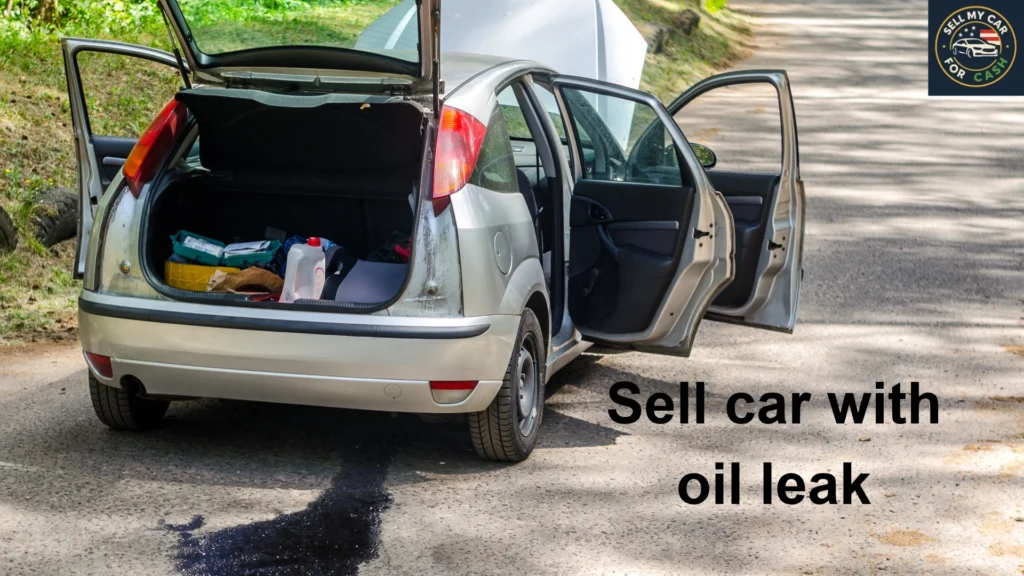
Should You Fix It or Sell It?
Try a few simple questions:
- What’s a car worth running? If the repair costs more than about half of that, fixing it rarely pays off.
- Has the engine been damaged? A car that ran low on oil may have more problems than the leak.
- What else needs work? Tires, brakes, suspension and rust add up.
- How long will you keep it? A newer, well-loved car can justify a repair. An older car on its last legs usually can’t.
Before deciding, check your warranty and look up your VIN at nhtsa.gov/recalls. Some engines have known oil leak problems, and the manufacturer may help with the cost.
Do Stop-Leak Additives Actually Work?
They’re tempting, and they get mixed reviews. These products swell rubber seals slightly, which can slow a seep from an aging seal. They won’t fix a cracked pan, a torn gasket or a failed crankshaft seal, and heavy additives may thicken oil in ways your engine doesn’t love.
If you use one, think of it as a short-term bridge, not a cure. Mention it to a buyer, because it’s part of the car’s story. A slowed leak that returns is still a leak.
Can an Oil Leak Affect an Inspection or Registration?
It can, depending on where you live. Some states or local programs flag fluid leaks during a safety or emissions inspection, and a leak that fails the check can stop a registration renewal until it’s fixed. Rules differ, so check with your local motor vehicle agency. If your car has failed an inspection because of a leak and you’d rather not repair it, that’s a common reason people sell as is.
Who Buys Used Cars With Oil Leaks?
Your options come down to who sees value in the car as it is:
- Dealers. Some take a trade-in with mechanical trouble, but the offer reflects the risk, and many pass.
- Private buyers. Mechanics and DIY owners sometimes want a project. Expect haggling, strangers at your door and the need to disclose the leak.
- Scrapyards. They pay for metal weight, often expecting you to handle the tow.
- Direct buyers like us. We price the whole vehicle, running or not, send a tow truck at no charge and handle the paperwork. Our cash for junk cars page explains how we think about older vehicles.
If you want the simplest route, a direct buyer is hard to beat.
How Much Cash Can You Get for a Car With an Oil Leak?
No honest buyer can name a final number without knowing the car. In general, offers for cars with oil leaks run from a few hundred dollars for an older, high-mileage vehicle to a couple of thousand dollars or more for a newer, clean, in-demand model. Those are ballparks, not promises. What moves the number:
- Make, model and year. Popular models hold value. Browse our car models page.
- How severe the leak is. A seep is priced differently from a stream.
- Whether the engine is damaged. Low-oil damage lowers the offer.
- Whether it runs and drives. A car that still starts generally brings more.
- Overall condition. Body, glass, wheels, interior and transmission all count.
- Missing parts. A missing catalytic converter or battery reduces the offer.
- Paperwork. A clean title keeps things simple.
The surest way to see your number is to describe the car honestly through our instant offer form.
Do You Have to Tell the Buyer About the Leak?
Yes, and it works in your favor. Hiding a known leak can create legal trouble in a private sale, and the rules vary by state. It also doesn’t work in practice, since buyers and drivers spot fresh oil quickly. With a professional buyer, honesty keeps the offer firm. We price the car based on what you tell us, and when the car matches the description, the offer holds at pickup. Tell us where the oil is coming from, how fast it’s losing oil and whether the engine ever ran low.
What About Older Cars, Trucks and Diesels?
Older cars leak more often, because rubber seals harden and gaskets age. A small leak on a high-mileage engine is common, and buyers expect it. Trucks and diesels can have bigger oil capacities and more complex lines, so leaks may cost more to trace and fix.
The good news is that these vehicles hold their value. Frames, drivetrains and bodies stay worth something. Tell the buyer about modifications, tow packages and anything unusual, and describe the leak as precisely as you can.
What Do Real Situations Look Like?
Here are three typical ones. They’re composites, not customer stories, but they show how decisions tend to go.
The old sedan. A 14-year-old car leaks from the rear main seal, and the repair quote exceeds the car’s value. The owner doesn’t want to pour money into it, so they take a cash offer instead.
The valve cover leak. A driver notices a drip on a newer car and has a mechanic replace the valve cover gasket for a few hundred dollars. The car runs fine, and selling it wasn’t necessary.
The truck that ran low. A work truck leaks steadily, and the owner keeps topping up the oil. When the oil light finally flashes, the engine is damaged. Rather than pay for a rebuild, the owner sells the truck as is.
In each case, an honest diagnosis made the decision easy.
How Does the Sale Work?
The process is short, and the car doesn’t need to run.
- Share your car’s details. Year, make, model, condition, ZIP code and what the leak looks like.
- Review your offer. It’s based on your actual vehicle, and there’s no obligation.
- Choose a pickup time. Same-day pickup is often possible depending on where you live. We arrange towing in all 50 states and cover the cost.
- Hand over the paperwork. The driver confirms the car matches your description, and you sign the title and bill of sale.
- Get paid. Payment follows when the car leaves.
Our free car removal page covers towing in more detail.
What Paperwork Do You Need?
You’ll need the title in your name, a photo ID and a bill of sale. If you still owe money, your lender holds the title and you’ll need a payoff figure. Our FAQ page answers questions about selling with a loan. If the title is missing, see our guide to cash for cars without a title. Many states also provide a release of liability form, so check yours.
What Mistakes Should You Avoid?
A few common ones cost people money:
- Ignoring the dipstick. Low oil can destroy an engine in a hurry.
- Driving it “just a little more.” A short trip on empty can finish the engine.
- Hiding the leak from a buyer.
- Paying for a full teardown before you know the repair is worth it.
- Waiting months. The car keeps losing value while it sits.
- Signing the title before you’re paid.
Why Choose to Sell My Car for Cash?
We buy cars and trucks in any condition, running or not, with a title or without one. Your offer is based on your actual vehicle, towing is free and we serve all 50 states. Questions are welcome at (888) 781-2436, so ask about pricing, paperwork or timing before you decide. An offer costs nothing to request, and there’s no pressure to accept it.
FAQs
Can I sell a car with an oil leak?
Yes. An oil leak lowers the price but doesn’t make the car unsellable. Buyers of vehicles with mechanical trouble expect it and price it in.
Is a car with a major oil leak dead?
Not necessarily. Many leaks are repairable, and even serious ones leave a car with value. Check the oil level and avoid driving it until a mechanic looks at it.
How much is a car with an oil leak worth?
It depends on the year, make, model, condition and how severe the leak is. An instant offer is the quickest way to see your number.
Do I pay for towing?
Not with us. Pickup is free in all 50 states. With other buyers, ask about towing and admin fees before accepting.
Who buys used cars with oil leaks?
Dealers, private buyers, scrapyards and direct buyers like us. If the repair isn’t worth it, a direct buyer is usually the simplest choice.
Will the offer change at pickup?
It shouldn’t, if your description is accurate. The driver checks that the car matches what you told us. Only a real difference could change the price.
Ready for Your Offer?
A major oil leak is a warning, not the end of your vehicle’s value. Find out where it’s coming from, weigh the repair cost and compare your options. Whatever you choose, decide before the oil runs low. If selling is the better path, request your price through our instant offer form and we’ll arrange the rest.