
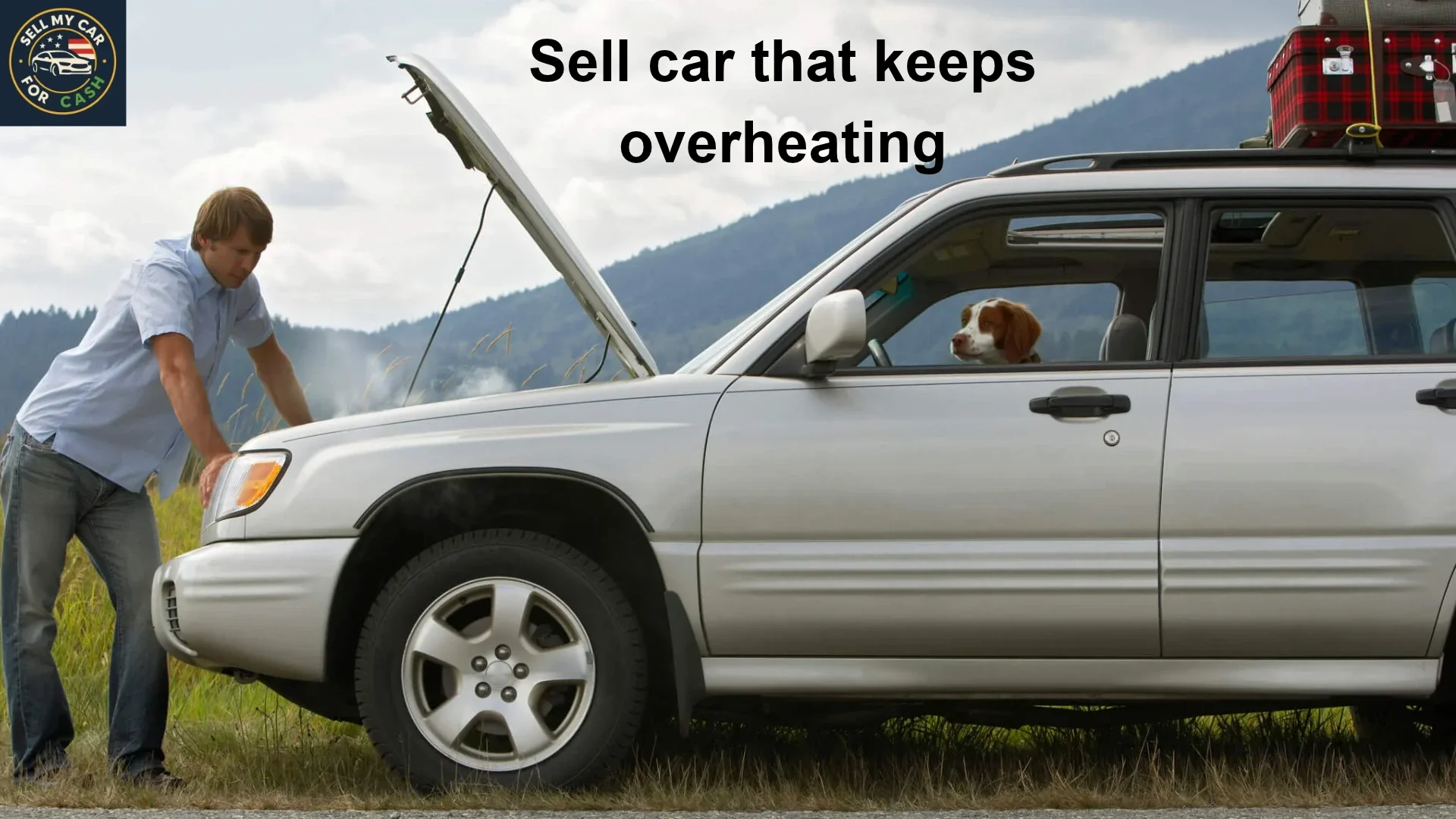
The temperature needle creeps upward in traffic. You crank the heater, hold your breath and hope the gauge settles down. Maybe it does this time. Maybe it doesn’t, and you end up on the shoulder with steam rolling out from under the hood. Either way, the same question follows you home: is this car done, or can you still do something with it?
You can. A car that keeps overheating isn’t dead, and it isn’t worthless. People do buy these vehicles, and you don’t need to fix anything first. This guide covers what to do when it overheats, how to tell a cheap problem from a serious one, what repairs cost, who buys these cars and how to turn yours into cash. We work with sellers across the whole country, so what follows applies wherever you live.
What Should You Do the Moment Your Car Overheats?
Protect yourself and the engine first. When the gauge climbs or a warning light appears:
- Turn on the heater at full blast and open the windows. It pulls some heat away from the engine while you look for a place to stop.
- Pull over safely and shut the engine off. Every extra minute of driving hot can do real damage.
- Don’t open the radiator cap or the coolant reservoir while it’s hot. Pressurized coolant can scald you.
- Wait at least 30 minutes before touching anything under the hood.
- Check the coolant level once it has cooled. Low coolant is a clue, not a fix.
- Call for a tow if it overheats again after cooling or if you see steam, leaks or smell something sweet.
It’s tempting to nurse the car home with the gauge in the red. Don’t. That decision turns a repairable cooling problem into a ruined engine more often than anything else.
Is a Car That Keeps Overheating Really Dead?
Not necessarily. Overheating is a symptom, and the cause can be small or large. A stuck thermostat or a failing fan is a modest repair. A cracked cylinder head or a blown head gasket is a major one. The car can be sold in either case.
Even a seriously damaged engine leaves you with a vehicle that has value: a body, a frame, wheels, a transmission and plenty of metal. A buyer who works with mechanical problems prices all of that, and the offer reflects what’s wrong. So “my car keeps overheating” means “I have a car that needs work,” not “I have nothing.”
Why Do Cars Keep Overheating?
Your cooling system circulates coolant through the engine and radiator, and anything that interrupts the flow can cause trouble. The usual suspects:
- Low coolant from a leak. Hoses, the radiator, the water pump and the heater core can all leak.
- A stuck thermostat. If it stays closed, hot coolant can’t reach the radiator.
- A clogged or damaged radiator. Old coolant and deposits can block passages, and bent fins reduce cooling.
- A failing water pump. If it doesn’t move coolant, the engine heats up fast.
- A broken cooling fan. The car runs fine at highway speed but overheats at stoplights.
- A collapsed hose or bad radiator cap. Either can keep pressure from building properly.
- A blown head gasket. Hot gases or coolant leak where they shouldn’t, which both causes and results from overheating.
- Air trapped in the system. Often from a poorly done repair.
Because the list is long, repeated overheating is a good reason to get a proper diagnosis before you spend money.
Does Overheating Only in Hot Weather or Traffic Mean Less Trouble?
Sometimes, but don’t rely on it. A car that overheats only in stop-and-go traffic or on 100-degree days often has a marginal cooling system: a weak fan, a partly clogged radiator or old coolant that no longer carries heat well. Those are usually fixable. The problem is that “only sometimes” tends to become “every time” as the system wears further.
An engine that runs hot a few times can still suffer lasting harm, including warped parts and a weakened head gasket. So treat every overheating event as real, even if the gauge settled afterward. If it has happened more than once, assume the problem will return and plan accordingly.
How Can You Tell a Cheap Fix From a Serious One?
A few clues help:
Signs it may be minor:
- Coolant is low and you can see a leak or a loose hose
- The cooling fan doesn’t spin
- The temperature spikes only in stop-and-go traffic or on very hot days
- The problem started right after a coolant change or other repair
Signs it may be serious:
- White smoke from the exhaust with a sweet smell
- Milky, tan sludge on the oil cap or dipstick
- Bubbles in the coolant reservoir while the engine runs
- Coolant disappearing with no visible leak
- Overheating again after a repair
- Rough running, misfires or loss of power
A shop can run a cooling-system pressure test and a combustion-leak test, which checks for exhaust gases in the coolant. Those tests are quick and cost far less than guessing wrong.
What Happens If You Keep Driving an Overheating Engine?
Heat is hard on metal. When an engine runs too hot, aluminum parts such as cylinder heads expand and can warp. The head gasket, which seals the cylinders, can fail and let coolant into the oil or the combustion chamber. Oil loses its ability to lubricate, bearings wear and pistons can scuff or stick. In the worst case, the engine seizes and won’t turn at all.
The jump from a few-hundred-dollar cooling repair to a multi-thousand-dollar engine job often happens in a single drive. That’s why the first rule is always to stop. It’s also why a car that has overheated badly more than once is usually worth less than a car that overheated once and was shut down at once.
What Does Fixing It Cost?
It varies widely, which is why the diagnosis matters:
- A thermostat, hose or radiator cap: often well under a few hundred dollars
- A radiator or water pump: commonly several hundred to around a thousand dollars
- A head gasket: often between $1,500 and $3,500, and more for V6, V8 or turbocharged engines
- A cracked head or a replacement engine: commonly $3,000 to $7,000 or more
Those figures are rough, and labor rates differ by region. Add the time the car sits in the shop and the cost of getting around without it.
Is It Worth Fixing, or Should You Sell?
Here’s a simple rule of thumb: if the repair costs more than about half of what the car is worth running, fixing it rarely pays off. A few quick examples:
- A 2008 sedan worth about $3,500 with a $2,800 head gasket quote. Selling as is usually wins.
- A 2016 SUV worth $15,000 with a $700 radiator and fan repair. Fixing it clearly makes sense.
- A 2010 truck worth $6,000 with a recurring overheating problem and a $4,500 engine quote. Selling is the smarter call.
Before you decide, check your warranty and look up your VIN at nhtsa.gov/recalls. Some engines have known cooling-system problems, and the manufacturer may cover part of the cost.
Who Buys a Car That Keeps Overheating?
Your options come down to who sees value in the car as it is:
- Dealers. Some take trade-ins with mechanical trouble, but the offer reflects the risk, and many pass entirely.
- Private buyers. Mechanics and DIY owners sometimes want a project. Expect haggling, strangers at your door and the need to disclose the problem.
- Scrapyards. They pay for metal weight, often expecting you to handle the tow.
- Direct buyers like us. We price the whole vehicle, running or not, send a tow truck at no charge and handle the paperwork. Our cash for junk cars page explains how we think about older vehicles.
If you want the simplest route, a direct buyer is hard to beat.
How Much Cash Can You Get for a Car That Keeps Overheating?
No honest buyer can name a final number without knowing the car. In general, offers for cars that keep overheating run from a few hundred dollars for an older, high-mileage vehicle to a couple of thousand dollars or more for a newer, clean, in-demand model. Those are ballparks, not promises. What moves the number:
- Make, model and year. Popular models hold value. Browse our car models page.
- How serious the damage is. A car with a simple cooling leak is priced differently from one with a warped head.
- Whether it runs and drives. A car that still starts generally brings more than one that doesn’t.
- Overall condition. Body, glass, wheels, interior and transmission all count.
- Missing parts. A missing catalytic converter or battery reduces the offer.
- Weight and scrap prices. Metal value changes over time.
- Paperwork. A clean title keeps things simple.
The surest way to see your number is to describe the car honestly through our instant offer form.
How Do You Describe the Problem So the Offer Holds Up?
Precision protects your price. When you request an offer, mention:
- When it overheats: at idle, in traffic, at highway speed or under load
- How often it happens and when it started
- Any coolant loss, visible leaks or white smoke
- The color and condition of the oil
- Repairs you’ve already tried, such as a thermostat or radiator
- Whether it starts and drives, and what the gauge shows
- Year, make, model, mileage and title status
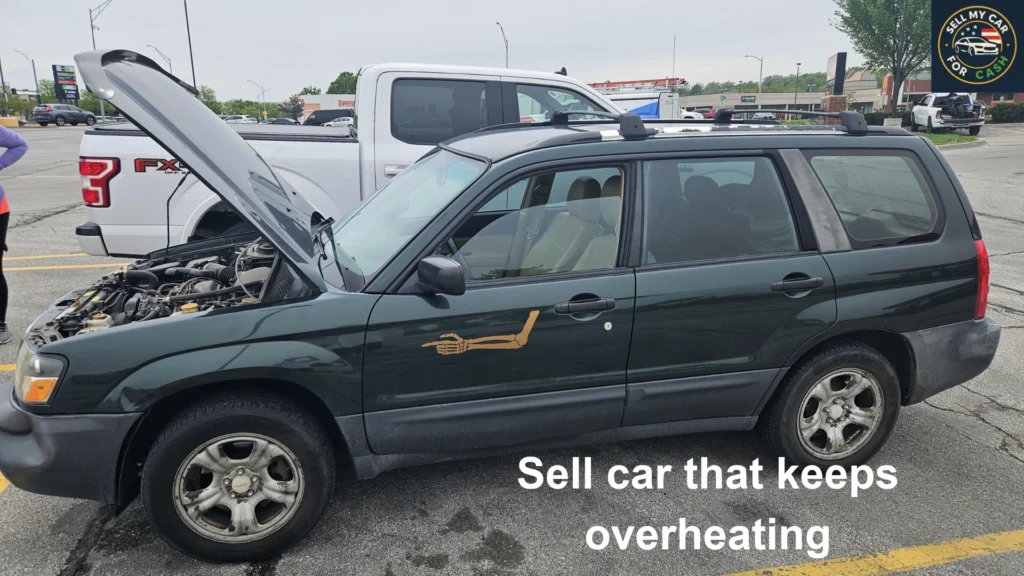
Photos of the engine bay, the dashboard and any leaks help too. A complete description keeps the quote steady at pickup.
Do You Have to Tell the Buyer It Overheats?
Yes, and it works in your favor. Hiding a known engine problem can create legal trouble in a private sale, and the rules vary by state. It also tends to fall apart in practice. Overheating leaves signs, such as coolant stains, discolored oil and warning codes, and a buyer who finds out at pickup will lower the price or walk away.
With a professional buyer, honesty simply keeps the offer firm. We price the car based on what you tell us, and when the car matches the description, the offer holds at pickup. That includes telling us when it overheats, how often and what has been tried.
What About Trucks and SUVs That Overheat?
Trucks and SUVs work harder, which makes cooling problems show up sooner. Towing, hauling, steep hills, desert heat and long idling can all push temperatures up, and a cooling system that’s marginal may fail when the load increases. Repairs on larger engines usually cost more, and diesel engines can be more expensive still.
The good news is that trucks and SUVs hold their value. Frames, drivetrains and bodies stay worth something even when the engine has trouble. Tell the buyer about any lift kit, tow package or modifications, and describe when the overheating happens.
What Do Real Situations Look Like?
Here are three typical ones. They’re composites, not customer stories, but they show how decisions tend to go.
The commuter with a head gasket. A 13-year-old sedan overheats every few weeks, and a mechanic finds a leaking head gasket. The quote is higher than the car is worth. The owner skips the repair and sells it as is.
The towing truck. A work pickup overheats on hills while pulling a trailer. A new radiator and thermostat fix it, and the owner keeps the truck. A clear diagnosis made the right choice obvious.
The car that overheated twice. A driver replaces a thermostat, and a month later the gauge spikes again. The engine has been damaged by the earlier heat. Not wanting to sink more money into it, the owner requests an offer and has the car towed away.
In each case, a quick, honest diagnosis settled the decision.
How Does the Sale Work?
The process is short, and the car doesn’t need to run.
- Share your car’s details. Year, make, model, condition, ZIP code and what the overheating looks like.
- Review your offer. It’s based on your actual vehicle, and there’s no obligation.
- Choose a pickup time. Same-day pickup is often possible depending on where you live. We arrange towing in all 50 states and cover the cost.
- Hand over the paperwork. The driver confirms the car matches your description, and you sign the title and bill of sale.
- Get paid. Payment follows when the car leaves.
Our free car removal page covers towing in more detail.
Do You Need to Drive the Car Anywhere to Sell It?
No, and you shouldn’t. We pick the car up where it sits, whether that’s your driveway, your workplace, a repair shop or a storage lot. If it’s at a shop, tell us the shop’s name and any pickup requirements, such as an unpaid bill or a release form. Don’t drive an overheating car across town to meet a buyer. A tow is free with us, and it spares the engine from additional damage.
What Paperwork Do You Need?
You’ll need the title in your name, a photo ID and a bill of sale. If you still owe money, your lender holds the title and you’ll need a payoff figure. Our FAQ page answers questions about selling with a loan. If the title is missing, see our guide to cash for cars without a title. Many states also provide a release of liability form, so check yours.
What Mistakes Should You Avoid?
A few common ones cost people money:
- Driving it “one more time.” A hot engine can warp parts in minutes.
- Using stop-leak products as a cure-all. They can clog small passages and rarely fix a real leak or a bad gasket.
- Hiding the problem from a buyer.
- Paying for a full teardown before you know the repair is worth it.
- Waiting months. The car keeps losing value while it sits.
- Signing the title before you’re paid.
Why Choose Sell My Car for Cash?
We buy cars and trucks in any condition, running or not, with a title or without one. Your offer is based on your actual vehicle, towing is free and we serve all 50 states. Questions are welcome at (888) 781-2436, so ask about pricing, paperwork or timing before you decide. An offer costs nothing to request, and there’s no pressure to accept it.
FAQs
Can I sell a car that keeps overheating?
Yes. Overheating lowers the price but doesn’t make the car unsellable. Buyers of vehicles with engine trouble expect it and price it in.
Is a car that keeps overheating dead?
Not necessarily. The cause may be a cheap cooling repair, and even a serious problem leaves a car with value. Avoid driving it until a mechanic checks it.
How much is a car that keeps overheating worth?
It depends on the year, make, model, condition and how serious the damage is. An instant offer is the quickest way to see your number.
Do I pay for towing?
Not with us. Pickup is free in all 50 states. With other buyers, ask about towing and admin fees before accepting.
Who buys used cars that keep overheating?
Dealers, private buyers, scrapyards and direct buyers like us. If the car isn’t worth the repair, a direct buyer is usually the simplest choice.
Will the offer change at pickup?
It shouldn’t, if your description is accurate. The driver checks that the car matches what you told us. Only a real difference could change the price.
Ready for Your Offer?
An overheating engine is a warning, not the end of your vehicle’s value. Find out what’s causing it, weigh the repair cost and compare your options. Whatever you choose, decide before the problem gets worse. If selling is the better path, request your price through our instant offer form and we’ll arrange the rest.