
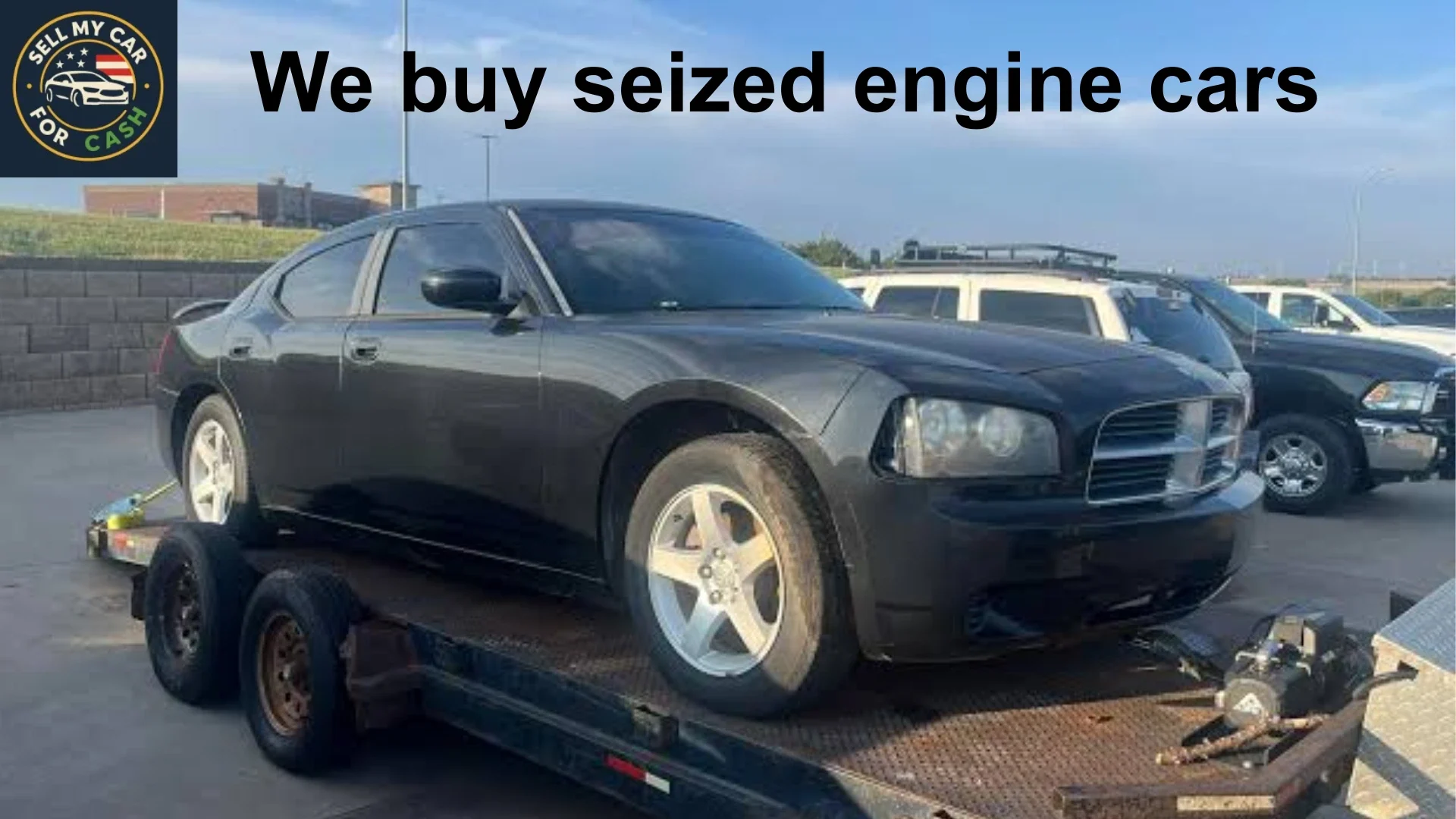
You turn the key and the dashboard lights up like normal. The radio still works. The starter gives one heavy clunk, or maybe no sound at all, and the engine refuses to move. If that sounds familiar, you may be dealing with a seized engine, and a few questions are probably running through your head. Can it be saved? What is the car worth now? Who would even want it?
At Sell My Car for Cash, we buy seized engine cars in any make or model, and the short version is this: you have more choices than you think, and most of them don’t involve a four-figure repair bill. This guide helps you confirm the problem, weigh repair against selling, understand what shapes an offer, and hand the car over with free towing. Skim the headings if you’re in a hurry.
Is Your Engine Seized or Just Stuck?
Plenty of no-start problems look like a seized engine at first glance. Before you assume the worst, run through the usual suspects:
- Dead battery. Lights are dim or dead, you hear fast clicking, and the dash barely wakes up.
- Bad starter. The lights stay bright, but you hear one click or a whirring noise and nothing turns.
- Hydrolock. Liquid got into a cylinder, usually after driving through deep water. Liquid can’t be compressed, so the engine stops cold.
- Long-term sitting. Moisture and rust can glue piston rings to the cylinder walls after months or years of sitting.
- True seizure. Metal parts have fused or jammed, typically after oil starvation or severe overheating.
With a genuinely seized engine, the electrical side usually behaves normally. The lights come on and the radio plays, yet the engine won’t rotate. Many owners remember a loud knock or grinding sound, followed by sudden silence, just before it died.
Mechanics confirm it with a simple test. They remove the spark plugs and try to turn the crankshaft by hand with a breaker bar. If it won’t budge, the engine is seized. If it turns but liquid sprays from a cylinder, it’s hydrolock. That’s a shop job, though, and forcing the bar can cause extra damage, so leave it alone unless you’ve done it before.
One more rule while you’re figuring this out: stop cranking. Repeated attempts on a locked engine can burn out the starter and drain the battery without changing anything.
What Makes an Engine Seize?
Almost every seizure comes down to friction and heat getting out of hand.
Oil starvation is the most common cause. A leak, a skipped oil change, a weak oil pump or sludge-clogged passages leave metal grinding against metal. Overheating comes next. A failed water pump, a leaking radiator or a stuck thermostat lets temperatures climb until parts swell and bind. Water ingestion causes hydrolock. A snapped timing chain or belt can send valves crashing into pistons. And plain neglect plays a part too: an engine that sits untouched for years can lock up from corrosion alone.
Some engine designs burn oil between changes, so the dipstick matters more than the maintenance schedule suggests. A car that quietly ran two quarts low for months can end up in a driveway looking just like yours.
Why does the cause matter? Because it affects whether the engine can be freed and how a buyer prices the car. A rusty, long-parked engine is a different story from one that welded itself together at highway speed.
What Warning Signs Come Before a Seizure?
Engines rarely seize without warning. If you’re reading this before yours has gone, or you’re worried about a second car, these are the early alerts worth taking seriously:
- A ticking or tapping noise that grows louder as the engine warms up
- An oil pressure light that flickers at idle, even briefly
- A dipstick that reads low every time you check it
- Blue-gray smoke from the exhaust, a sign of oil burning
- A temperature gauge creeping past its usual spot
- A sweet or burning smell after you park
- Sluggish acceleration that wasn’t there last month
Any one of these deserves a quick check. Several together mean pull over, shut the engine off and call for a tow instead of finishing the trip. Driving another ten miles to get home is how a repairable problem becomes a locked one.
Can a Seized Engine Be Freed?
Sometimes. It depends on why it is locked.
Rust from sitting. If corrosion is the culprit, a mechanic may pull the plugs, soak the cylinders in oil for several days, then try turning the crank gently. It works often enough to be worth a try, though a car that sat for years usually has other problems waiting, like old fuel, dry-rotted hoses and tired brakes.
Hydrolock. If you stopped right away and didn’t try to restart, the engine can sometimes be saved. The shop clears the liquid, changes the oil and checks for bent rods. If the engine was cranked or driven with water inside, damage is likelier.
Seized while running. This is the hard case. Scored cylinders and welded bearings rarely come back with a soak. The fix is a rebuild or a replacement engine.
Those fixes commonly run between $3,000 and $7,000, and more for trucks, European models and anything turbocharged. Be skeptical of any “quick fix” promise on an engine that locked up while it was running.
Is Repair Ever Worth It?
Sometimes, the car’s value decides. Here are three made-up but realistic examples:
- A compact sedan from 2008 that would sell for about $3,500 running. The engine quote is $4,500. Selling it as it wins easily.
- A 2016 pickup with low miles that would sell for $18,000 running. The quote is $6,500. Repair can make sense here, since you’d still have a valuable truck afterward.
- A 2011 SUV with 190,000 miles worth about $5,000 running, a $5,500 engine quote and worn suspension on top. Selling is the smarter call.
A handy rule: when the repair approaches or passes half of what the car would be worth running, think hard before spending. Add the cost of renting or borrowing a car for weeks, and the picture tilts further toward selling. Before deciding, also check whether a powertrain warranty or extended plan still covers the engine.
If you do get a quote, ask the shop three questions. Is the engine truly seized or just hydrolocked? Would the job use a rebuilt, used or brand-new engine, and what warranty comes with it? And what is the total after labor and shop fees? A vague answer to any of them is a good reason to get a second opinion.

Who Buys a Car With a Seized Engine?
Think of it as who sees value in what’s left.
Mechanics and rebuilders sometimes want a donor car or a project. They’ll usually pay little, expect you to deliver, and may take a long time to decide.
Salvage and scrap yards care about metal weight and recyclable components. The price tends to be thin, and pickup is often up to you.
Dealerships rarely take a car that can’t be driven. If they do, it often goes straight to auction, and the trade-in number shows it.
Direct buyers like us look at the entire vehicle, arrange the tow and handle the transfer paperwork. If your car has other damage on top of the engine, our page about how to sell your damaged car for cash explains how we handle it.
Is It Smarter to Part It Out Yourself?
Some owners wonder whether they’d earn more by stripping the car and selling pieces online. It can work, but the catch is the amount of work involved.
You’d need tools, space, time and the know-how to remove parts without damaging them. Each item has to be photographed, listed, packed and shipped or handed over to a stranger. Buyers haggle, and some parts sit for months. A dead engine itself is hard to sell, since few people want a seized core. And when you’re done, you’re left with a stripped shell that still has to be hauled away, sometimes for a fee, and some cities have rules about how long a dismantled vehicle can sit on your property.
For a hobbyist with a free weekend, it might pay. For most people, a single sale of the whole car is faster, cleaner and far less stressful. You skip the listings, the no-shows and the leftover shell.
What Is a Seized-Engine Car Worth?
Here’s something many sellers don’t expect: a seized engine often carries very little value by itself, so the offer leans on the rest of the car. That’s why two cars with identical engine trouble can get very different numbers.
Offers for seized-engine cars generally run from a few hundred dollars for an older, small, worn vehicle to a couple of thousand, or more, for a newer, clean, in-demand model. Those are ballparks, not promises. When we price a vehicle, we look at:
- Age, make and model
- Mileage and overall condition
- Whether the transmission and other major components still work
- Body, glass, wheels and interior
- Anything missing from the car
- Value of usable parts and scrap metal
- How easy it is to reach and load
- The state of the paperwork
You can browse by brand on our car models page, but the quickest route is to describe your car honestly through our instant offer form. Mention when the engine locked, what you heard beforehand, and whether the wheels turn. Those details help us quote a number that holds up at pickup.
How Does Free Towing Work With a Seized Engine?
Towing is where people expect surprises, so here’s how it usually goes.
We arrange a flatbed or a wheel-dolly tow depending on the car’s condition, and the cost is on us. We cover all 50 states, though a remote address may take a little longer to schedule than a city street.
A seized engine doesn’t normally stop the wheels from rolling when the car is in neutral, but a damaged transmission or a manual left in gear can. If you can still turn the key, shift into neutral and release the parking brake. If the steering wheel is locked and the key won’t turn, let us know. The driver may need a different approach.
A few details help the pickup go smoothly:
- Tell us about flat tires, missing wheels or a car wedged against a wall.
- Clear a path for the truck, especially if the car sits in a garage, a back lot or a muddy yard.
- Keep the keys and paperwork handy. If a key is lost, say so up front.
- Ask about pickup arrangements if you can’t be there yourself.
At the car, the driver confirms it matches your description, you sign, and payment follows. Our free car removal page covers the towing details.
What Paperwork Do You Need?
Mostly the basics. You’ll need the title in your name, a photo ID that matches it, and a bill of sale, which a reputable buyer provides. Many states also let you file a release of liability after the sale, so any tolls, tickets or parking fines tied to the car don’t come back to you. Rules differ by state, so check with your local motor vehicle agency.
If you still owe money on the car, your lender holds the title. Ask the lender for a payoff figure. Buyers used to financed vehicles can work with the lender, but if the offer is lower than the balance, you’ll cover the difference. Questions about selling with a loan are answered on our FAQ page.
If the title is lost or you never had one, don’t assume the sale is dead. Options vary by state, and many people start by requesting a duplicate. Our guide to cash for cars without a title lays out what to gather.
What Happens Between the Offer and the Payment?
Knowing the rhythm of the process takes the guesswork out of it.
It begins when you submit your details and receive an offer based on your car’s real condition. There’s no obligation, so you can compare it with other quotes. When you accept, you choose a pickup window. Depending on where you live, same-day pickup is often possible, and in busier or more rural areas it may take a little longer.
On pickup day, the driver arrives with the right equipment, checks the car against your description and loads it. You sign the title and bill of sale, and you’re paid. Afterward, file your release of liability if your state offers one, and cancel or change your insurance once you have the paperwork in hand. That’s the whole thing. For most people, the hardest part is the decision to let go of the car.
What Should You Avoid With a Seized Engine?
A few moves cost people money.
- Cranking again and again. It won’t free the engine, and it can wreck the starter.
- Pouring in “engine restore” additives. If the metal has scored or welded, a bottle of treatment isn’t going to fix it.
- Paying for a full teardown just to learn what you already know. A basic diagnosis is enough to decide.
- Letting the car sit outside for months. Rain, rodents and flat tires all shave dollars off the price.
- Signing the title before payment. Hand it over when the money changes hands.
- Accepting a quote with hidden fees. If towing or admin charges appear after you say yes, ask for a revised written offer or walk away.
Why Choose to Sell My Car for Cash?
We buy cars and trucks in any condition, running or not, with a title or without one. Your offer is based on your actual vehicle, towing is free, and we serve all 50 states. If your car is older and worn out, our cash for junk cars page may be a closer fit. Either way, you can reach a real person at (888) 781-2436 and ask questions before you decide. We’d rather you ask about pricing, paperwork or timing now than run into surprises later. An offer costs nothing to request, and there’s no pressure to accept it.
FAQs
Can I sell a car with a seized engine?
Yes. A locked engine lowers the price but doesn’t make the car unsellable. Buyers who deal in non-running vehicles expect engine trouble and price it in.
Do you still buy it if the wheels won’t turn?
In most cases, yes. Just tell us when you request your offer. A car with locked wheels needs different equipment, and knowing ahead of time keeps the pickup on schedule.
Is towing really free in all 50 states?
With us, yes. Pickup doesn’t cost you anything. With other buyers, ask about towing and admin fees before accepting, so the final payment matches the quote.
How much is a car with a seized engine worth?
It depends on the year, make, model, condition and what’s still intact. Older cars may bring a few hundred dollars, and newer, in-demand vehicles can bring far more. An instant offer is the quickest way to see your number.
Can I sell it without a title?
Often you can. Requirements depend on your state and the vehicle’s age, so start by telling us what paperwork you have, and we’ll explain your options.
Will the offer change when the driver arrives?
It shouldn’t, as long as your description is accurate. The driver checks that the car matches what you told us. Only a real difference, such as missing major components, could change the price.
Ready for Your Offer?
A seized engine feels like a dead end, but it’s really a decision. Check what the repair would cost, be honest about what happened, and compare your options. If selling is the better path, request your price with our instant offer form and we’ll arrange the rest.